

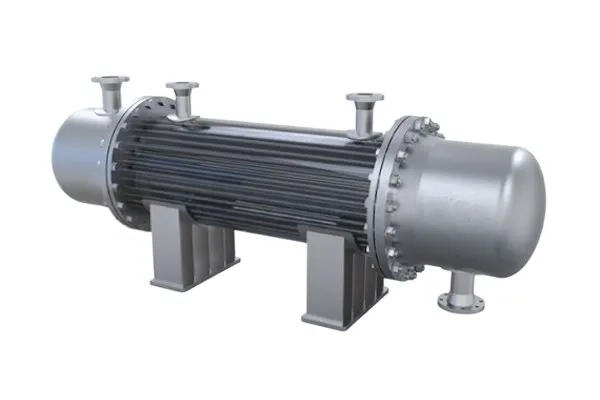
Regenerative Heat Exchanger is an advanced thermal device designed for efficient waste heat recovery, particularly in systems involving high-temperature gas streams such as gas turbines, furnaces, and metallurgical processes. Unlike traditional recuperative exchangers that transfer heat via a solid wall, regenerative exchangers store heat temporarily within a thermal mass (matrix) and release it to a cold stream during a cyclic or continuous process.
These exchangers are essential in today’s drive toward sustainable energy systems, offering a powerful method for reducing fuel usage, emissions, and operating costs in energy-intensive industries.
What is a Regenerative Heat Exchanger?
A regenerative heat exchanger is a type of heat exchanger where heat is alternately stored and released by a thermal storage medium, often referred to as a matrix. The matrix is alternately exposed to hot and cold fluid flows (usually gases), allowing it to absorb heat from the hot stream and release it to the cold stream.
This process is not simultaneous but time-separated, relying on:
- Rotation (in rotary regenerators), or
- Flow reversal (in fixed-bed regenerators)
The core idea is to regenerate and reuse thermal energy that would otherwise be wasted in exhaust streams, thus enhancing the overall system efficiency.
Types of Regenerative Heat Exchangers
Rotary Regenerative Heat Exchanger
Features a rotating wheel with a heat-storing matrix that continuously transfers heat between hot and cold gas streams.
Used widely in power plants and industrial furnaces for continuous heat recovery.
Fixed-Bed Regenerative Heat Exchanger
Uses static beds filled with ceramic or brick material; flow direction is alternated periodically to store and release heat.
Ideal for high-temperature applications like glass, steel, and chemical processing.
Periodic Switching Regenerative Exchanger
Operates by switching fluid flow between chambers without rotation, using valves for timing.
Common in compact systems like thermal oxidizers and small-scale industrial units.
How Does a Regenerative Heat Exchanger Work?
Heat Absorption Phase
Hot gas or air flows through a section of the matrix (usually ceramic or metal), transferring its thermal energy to the matrix material.
Rotation or Switching
- In rotary types: The matrix rotates slowly, carrying the stored heat to another section.
- In fixed-bed types: The flow direction is reversed after a set time interval using valves.
Heat Release Phase
Cold gas or air flows through the heated matrix section. The matrix releases the stored heat, warming the cold fluid.
Cycle Repeats Continuously
The cycle repeats to ensure continuous heat recovery, enabling significant energy savings.
Materials Used in the Matrix
- Ceramic Honeycomb: Excellent for high-temperature and corrosive environments.
- Metallic Foil or Mesh: Suitable for moderate temperatures with compact design.
- Graphite or Carbon Materials: Used in specialty chemical applications due to chemical inertness.
- Composite Alloys: Engineered for extreme temperatures and mechanical strength.
Modern Innovations in Regenerative Heat Exchangers
- Smart Matrix Monitoring: Sensors embedded in the matrix detect clogging, wear, or heat transfer loss.
- Variable-Speed Drive for Rotary Systems: Adjusts rotation speed based on thermal load requirements.
- Self-Cleaning Features: Systems with soot blowers or pulse-air cleaning for dusty environments.
- Modular Matrix Segments: Allow partial replacements and reduce downtime.
- Advanced Sealing Techniques: Minimize leakage between hot and cold zones to improve heat recovery.
Regenerative Heat Exchanger stands as a core innovation in industrial heat recovery. Its unmatched efficiency, ability to withstand extreme temperatures, and broad applicability make it an indispensable technology in today’s energy-conscious and cost-sensitive industrial world.
Whether used in a power plant turbine or a steel-making furnace, it ensures that no heat is wasted, turning potential energy loss into valuable input for the next process cycle.
In a future striving for net-zero emissions and optimized fuel use, regenerative heat exchangers will remain a cornerstone of industrial thermal design.