

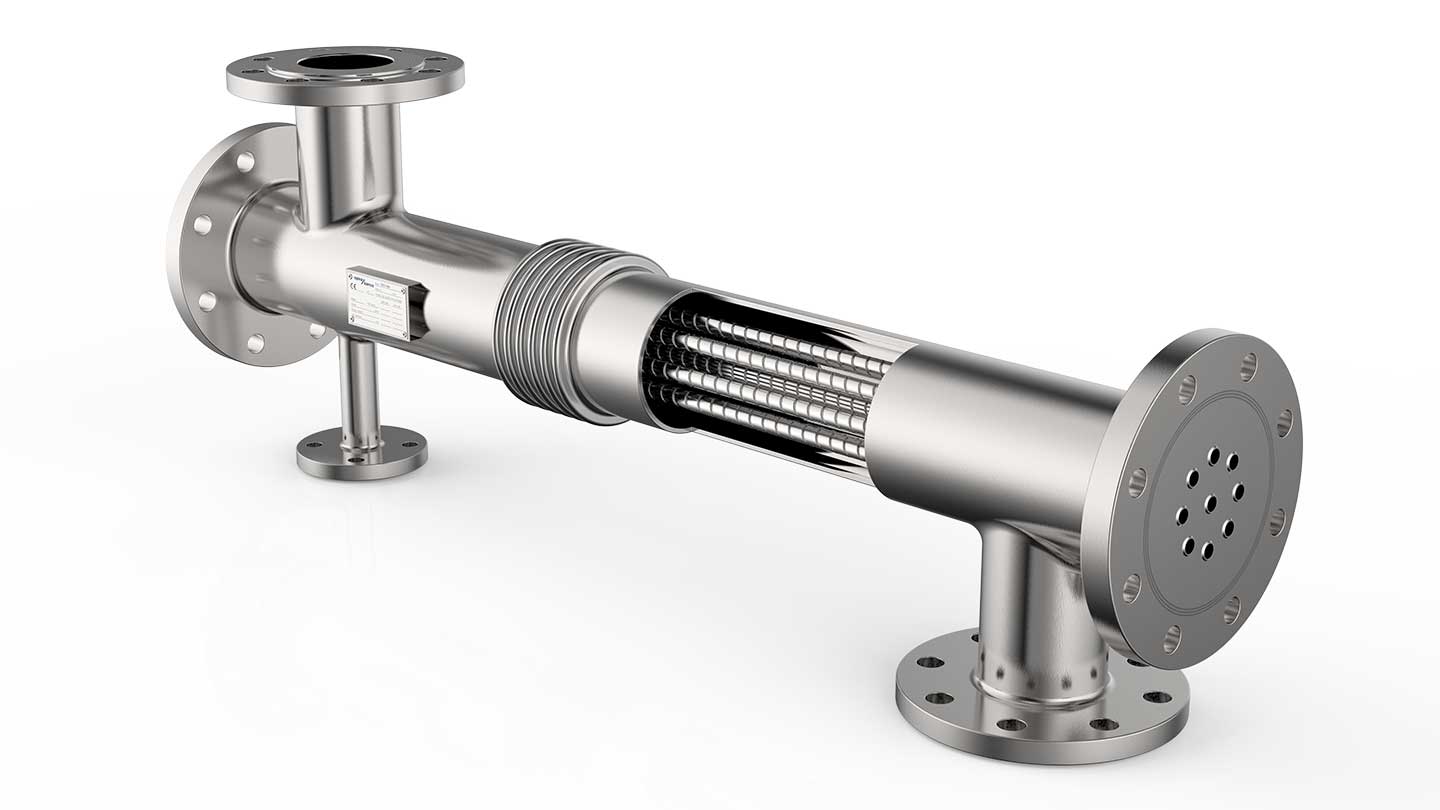
Exhaust Vapour Condenser technology is a vital solution in modern industry for capturing and condensing vapor-phase components from hot exhaust streams. Designed as specialized heat exchangers, exhaust vapour condensers cool high-temperature gases from processes such as chemical manufacturing, power generation, food processing, and pharmaceutical production. As vapors—including water, solvents, or volatile organics—come into contact with cooled surfaces, they condense into liquid form, enabling their recovery, reuse, or safe treatment. This process not only reduces emissions and minimizes environmental impact but also improves energy efficiency by reclaiming heat and valuable materials, contributing to cost savings and sustainable industrial operation
Key Benefits of Exhaust Vapour Condenser
Hot Exhaust Entry:
High-temperature exhaust containing vapor-phase components enters the condenser. These exhaust streams often come from dryers, engines, reactors, distillation units, or combustion systems.
Heat Exchange with Cooling Medium:
Inside the condenser, the exhaust stream flows over (or through) surfaces cooled by a circulating medium (typically chilled water, glycol solution, or another coolant). This creates a thermal gradient — heat moves from the hot vapor to the cooler surface.
Phase Change (Condensation):
As vapors lose heat and their temperature falls below saturation point (dew point), they convert to liquid. For instance, water vapor condenses into liquid water, solvents into liquid solvent, etc.
Collection & Discharge:
The condensed liquid is collected in trays or sumps at the bottom of the condenser. From there, it can be drained, processed, or reused depending on the application.
Cooled Gas Exit:
The now-cooler, mostly dehumidified exhaust gas exits the condenser — often ready for further emission treatment or direct venting.
Unique and Modern Applications
Solvent Recovery:
In paint shops, printing, and pharmaceutical facilities, condensers capture volatile organic solvents (e.g., acetone, methanol). These can be purified and reused, reducing raw material costs and emissions.
Biogas and Landfill Gas:
In biogas plants, condensers remove moisture, ammonia, and trace impurities from digester gas, protecting downstream equipment and improving gas quality.
Food & Fragrance Industry:
Essential oil distillation units often use condensers to capture aromatic vapors, ensuring valuable oils or flavors are recovered rather than lost.
Vacuum Drying Systems:
Used in pharmaceutical and chemical manufacturing, condensers capture solvent-laden vapors from vacuum drying chambers, improving efficiency and workplace safety.
Power Generation:
In geothermal and thermal plants, condensers help reduce visible vapor plumes, recover heat, and improve environmental compliance.
Innovation-Driven Features and Trends
Hydrophobic or Non-Stick Coatings:
These coatings on condenser surfaces prevent fouling or scaling, allowing condensed liquids to flow freely and reducing cleaning downtime.
Heat Recovery Integration:
Modern systems often use the heat extracted from exhaust vapors to preheat incoming process streams, improving overall plant energy efficiency.
Self-Cleaning Technologies:
Advanced condensers incorporate rotating brushes, mechanical scrapers, or ultrasonic vibration to break down deposits during operation.
Compact Modular Designs:
Engineered for tight spaces, these condensers use optimized tube layouts or plate designs, reducing footprint while maintaining capacity.
IoT and Smart Monitoring:
Sensors track flow rate, temperature, condensation efficiency, and fouling build-up in real-time, providing predictive maintenance alerts and data-driven optimization.
Environmental & Economic Benefits
Emission Reduction:
Condensing water or solvent vapors minimizes visible exhaust plumes and reduces volatile organic compound (VOC) emissions — a key step toward regulatory compliance.
Material Recovery:
Capturing solvents or valuable chemicals from exhaust means they can be purified and reused, saving significant raw material costs.
Energy Savings:
Heat recovered from exhaust can be reused to warm process fluids, cutting boiler or heater fuel use and reducing carbon footprint.
Workplace Safety:
Hazardous or flammable vapors are condensed and contained, reducing explosion risk and improving indoor air quality.
Sustainability & Certification:
Helps companies meet stringent environmental standards like ISO 14001, and contributes to net-zero or carbon-reduction initiatives.
Materials of Construction
Depending on the chemical and temperature conditions, condensers are built from:
- Stainless Steel (304L, 316L): For general corrosion resistance.
- Titanium: For highly corrosive exhaust streams (e.g., chlorides, acids).
- Hastelloy or Alloy 20: For harsh chemical environments.
- Cupronickel: Common in marine and coastal applications.
- Glass (Borosilicate): For lab-scale units needing high chemical resistance and visual monitoring.
Exhaust Vapour Condenser systems are increasingly indispensable as industries face stricter environmental regulations and rising energy costs. By transforming hot, moisture-laden exhaust into cleaner, cooler emissions while recovering valuable condensates, they support sustainability goals and improve process safety. Innovations such as compact modular designs, self-cleaning technologies, and smart monitoring are enhancing the performance and adaptability of these condensers across sectors. As industries worldwide shift toward greener practices and circular resource use, exhaust vapour condensers will remain central to achieving cleaner production, greater efficiency, and a more sustainable future.