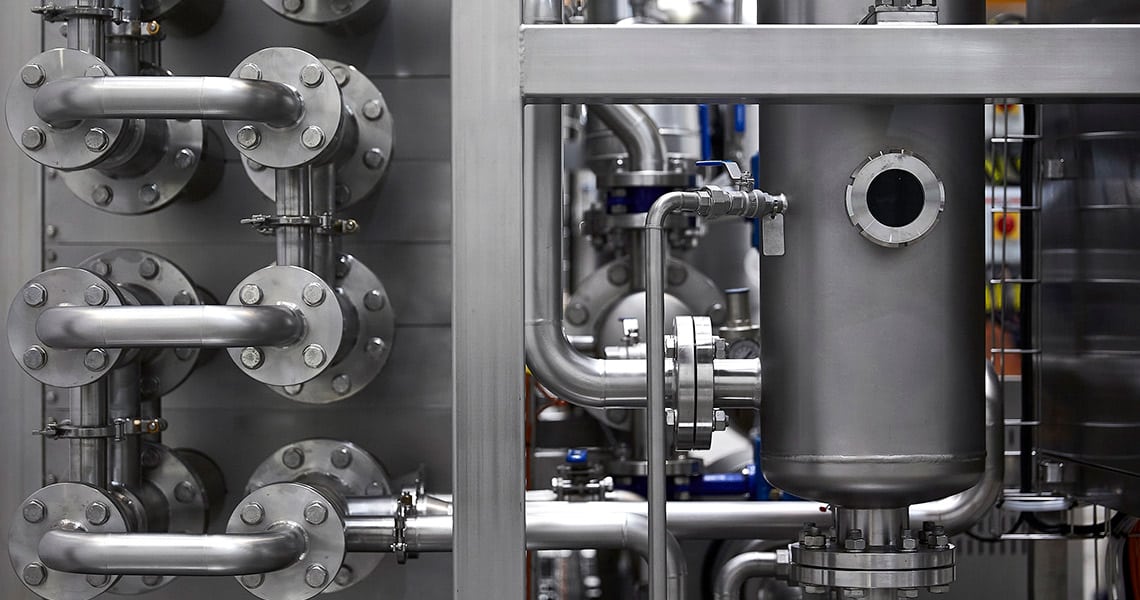

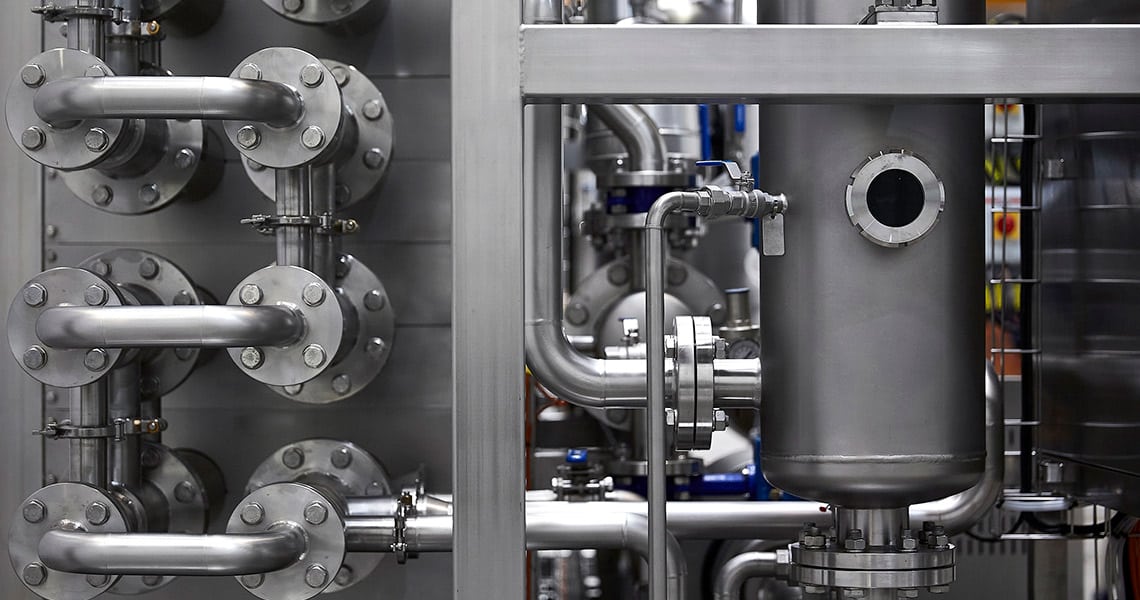
🔥 The Science of Transfer: How a Heat Exchanger Works
A heat exchanger is a crucial device that transfers thermal energy between two or more fluids (liquids, gases, or a combination) that are at different temperatures, without allowing them to mix. These mechanical marvels are fundamental to almost every industry—from making your morning coffee to powering industrial complexes. Understanding how a heat exchanger works is key to optimizing energy use in HVAC, refrigeration, power generation, and chemical processing.
The Basic Principle: Temperature Difference
The operation of a heat exchanger is governed by the Second Law of Thermodynamics: heat naturally flows from a warmer substance to a cooler substance. The primary goal is to facilitate this transfer efficiently across a solid barrier, typically a plate or a tube wall, which separates the fluids.
The efficiency of a heat exchanger is determined by three main factors:
- Temperature Difference ($\Delta T$): The greater the initial temperature difference between the two fluids, the faster the heat transfer rate.
- Surface Area: The larger the contact area (provided by plates or tubes), the more space is available for heat transfer.
- Material Conductivity: The material separating the fluids (like stainless steel or copper) must have high thermal conductivity to allow heat to pass through quickly.
Types of Flow
Heat exchangers are classified largely by the flow pattern of the two fluids:
- Parallel Flow: Both hot and cold fluids enter at the same end and travel in the same direction. This provides the smallest temperature difference at the outlet, limiting efficiency.
- Counter-Flow: The hot and cold fluids enter at opposite ends and flow in opposite directions. This arrangement maintains the largest average temperature difference across the entire length, making it the most thermally efficient design.
- Cross-Flow: One fluid flows perpendicular to the other, common in applications like finned-tube coils.
Common Design: Plate and Shell-and-Tube
The two most widely used designs dominate the market:
- Shell-and-Tube Heat Exchanger: One fluid flows inside a bundle of tubes, while the other fluid flows outside of the tubes, passing over the bundle inside a large shell. They are robust and ideal for high-pressure applications.
- Plate Heat Exchanger (PHE): Hot and cold fluids flow through alternating channels separated by thin, corrugated plates. The large surface area created by the numerous plates and the highly turbulent flow makes PHEs exceptionally compact and efficient.
By selecting the right type of heat exchanger, industries can recover waste heat, cool critical systems, and significantly reduce energy consumption, making them indispensable components of a sustainable and efficient infrastructure.
Keywords for SEO: Heat Exchanger Work, Heat Transfer, Shell-and-Tube Heat Exchanger, Plate Heat Exchanger, Counter-Flow, Thermal Efficiency, HVAC Heat Exchanger.