

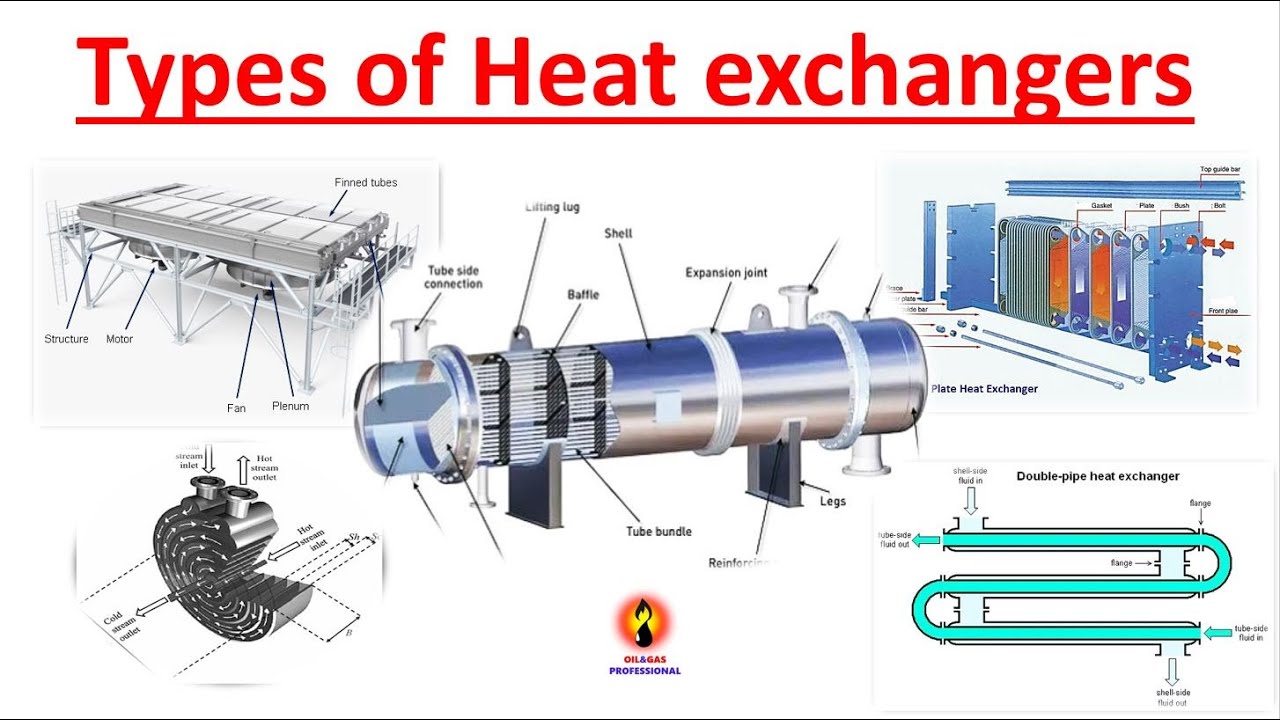
Heat exchangers are the unsung heroes of the industrial world. From the radiator in your car to the massive condensers in power plants, these devices are essential for transferring thermal energy between two or more fluids.
If you are looking for the right thermal solution, understanding the different types of heat exchangers is the first step toward optimizing efficiency and reducing energy costs.
What is a Heat Exchanger?
A heat exchanger is a system used to transfer heat between two or more fluids. These fluids may be separated by a solid wall to prevent mixing or may be in direct contact. They are classified based on their flow direction, construction, and the nature of the heat exchange process.
1. Shell and Tube Heat Exchangers
This is the most common type used in oil refineries and large chemical processes. It consists of a series of tubes (the tube bundle) enclosed within a large cylindrical shell.
- How it works: One fluid flows through the tubes, while the other flows over the tubes (through the shell) to transfer heat.
- Best for: High-pressure applications and large-scale industrial cooling.
2. Plate Heat Exchangers (PHE)
Plate heat exchangers use a series of thin, corrugated metal plates to transfer heat between fluids.
- How it works: The plates create a large surface area, allowing for extremely efficient heat transfer in a compact space.
- Best for: Food and beverage processing (due to easy cleaning), HVAC systems, and applications with space constraints.
3. Air Cooled Heat Exchangers (Fin-Fan)
Often seen on rooftops or in dry climates, these exchangers use ambient air to cool a process fluid.
- How it works: The fluid travels through fanned tubes, and a large motorized fan blows air across the fins to dissipate heat.
- Best for: Locations with limited water supply or where water-cooled systems are too expensive to maintain.
4. Double Pipe Heat Exchangers
The simplest form of heat exchanger, consisting of one pipe inside another larger pipe.
- How it works: One fluid flows through the inner pipe while the other flows through the annular space between the two pipes.
- Best for: Small cooling loads and high-viscosity fluids.
Comparison Table: Which One Do You Need?
| Type | Efficiency | Pressure Capacity | Maintenance | Space Required |
| Shell & Tube | Moderate | Very High | Difficult | Large |
| Plate (PHE) | Very High | Low to Moderate | Easy | Compact |
| Air Cooled | Moderate | High | Moderate | Medium |
| Double Pipe | Low | Moderate | Easy | Small |
Key Factors for Selection
When choosing between these types, consider the following:
- Fluid Type: Are the fluids corrosive, viscous, or prone to fouling?
- Temperature & Pressure: Does the exchanger need to withstand extreme industrial conditions?
- Budget: Consider both the initial capital cost and long-term cleaning/maintenance expenses.
Conclusion
Choosing the right heat exchanger can significantly impact your facility’s carbon footprint and utility bills. Whether it’s the rugged reliability of a Shell and Tube or the compact efficiency of a Plate Heat Exchanger, selecting the right technology is vital.
