

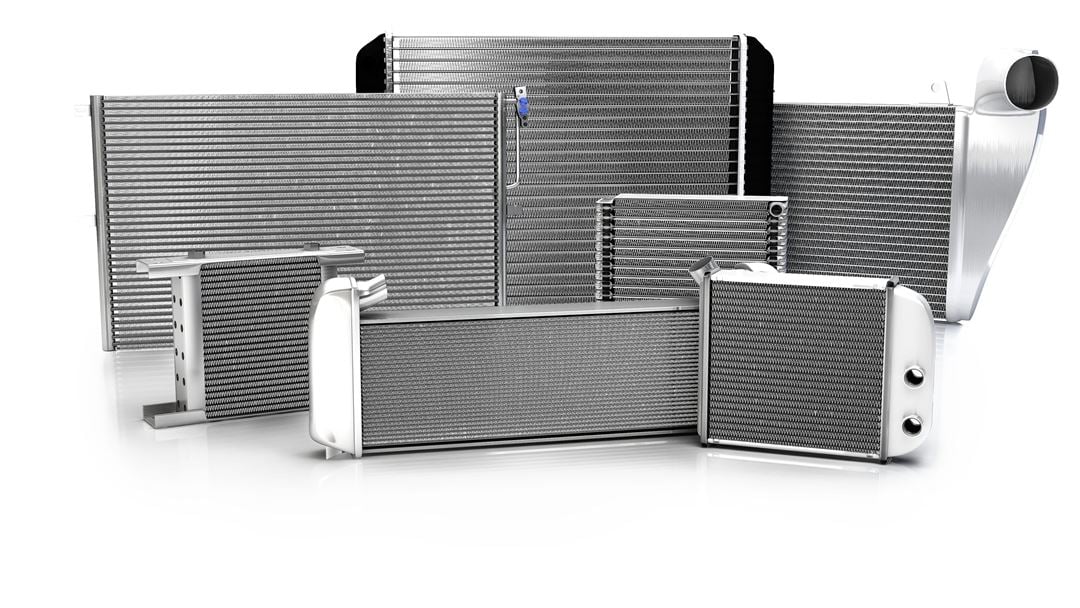
Aluminum Lithium Heat Exchangers represent a technological leap in the field of thermal energy transfer systems. By incorporating lithium—a light, reactive metal—into aluminum alloys, manufacturers are able to create heat exchangers that are significantly lighter, stronger, and more efficient than those made with conventional materials.
These advanced heat exchangers are purpose-built for industries that demand high performance with strict weight constraints, such as aerospace, electric vehicles, defense systems, and high-end industrial electronics. Their superior properties allow for enhanced heat transfer efficiency, lower structural mass, and improved lifecycle durability.
How Aluminum-Lithium Heat Exchangers Work
Like any conventional heat exchanger, Al-Li heat exchangers transfer heat from one fluid (gas or liquid) to another, without mixing the two. The difference lies in the material used:
- Al-Li alloys form the tubes, fins, and frames of the exchanger.
- Due to their enhanced thermal conductivity and reduced weight, the exchanger becomes more efficient and portable.
- These heat exchangers can be configured in plate-fin, microchannel, or tubular designs, based on the application.
Unique Advantages of Al-Li Heat Exchangers
Weight Reduction
- Al-Li alloys are about 8–15% lighter than traditional aluminum.
- This makes them highly desirable in aerospace, aviation, and automotive sectors where every gram matters.
Higher Thermal Conductivity
- With improved conductivity, heat dissipates faster, making the exchanger more responsive to fluctuating temperatures.
Superior Fatigue and Creep Resistance
- High resistance to thermal cycling and mechanical stress, especially at high operating temperatures.
Dimensional Stability
- Lower coefficient of thermal expansion ensures better structural integrity over time.
Longer Lifespan
- Increased resistance to corrosion and cracking leads to a longer operational life, even in aggressive environments.
Compact Design Possibility
- Due to higher material strength, thinner walls and finer fins are possible without compromising durability, allowing compact construction with maximum surface area.
Applications Across Industries
Aerospace and Aviation
- Used in aircraft environmental control systems (ECS), where lightweight and efficiency are critical.
- Employed in satellite radiator panels for thermal radiation in zero-gravity environments.
- Jet engine intercoolers made from Al-Li alloys offer superior heat rejection.
Electric Vehicles (EVs)
- Used in battery thermal management systems (BTMS) to prevent overheating.
- Compact Al-Li radiators improve cooling performance while reducing vehicle weight.
Spacecraft and Cryogenic
- Used in cryogenic heat exchangers due to superior low-temperature properties.
- They help manage temperatures in fuel systems and life-support modules.
Military and Defense
- Lightweight and durable systems ideal for portable radar cooling, armored vehicle climate control, and UAVs.
Advanced Electronics
- Used in semiconductor cooling, laser systems, and supercomputers where compact and efficient heat dissipation is essential.
Challenges and Considerations
- Cost: Al-Li alloys are more expensive than traditional aluminum due to complex manufacturing and limited availability.
- Weldability: Requires specialized welding techniques (e.g., friction stir welding) to avoid cracking.
- Limited Industrial Adoption: Still in the early stages of mass-market applications outside aerospace and defense.
Innovations in Manufacturing Al-Li Heat Exchangers
- Friction Stir Welding (FSW)
- Ideal for joining Al-Li components without heat-induced defects.
- Enhances bond strength and durability.
- 3D Printing of Heat Exchanger Cores
- Emerging trend to produce custom microchannel designs using Al-Li powders in additive manufacturing.
- Vacuum Brazing Compatibility
- Supports high-precision brazing for multi-layered finned heat exchangers.
- Nano-Coating Integration
- Advanced surface treatments protect Al-Li surfaces from corrosion, extending exchanger life in saltwater or acid-prone environments.
Conclusion
Aluminum-Lithium heat exchanger is a powerful engineering innovation aimed at high-performance industries requiring extreme efficiency, strength, and weight savings. With a unique combination of thermal, mechanical, and structural benefits, Al-Li alloys enable thermal systems that are not only lighter but also stronger and more reliable.
Although still limited by cost and availability, their increasing adoption in spacecraft, aviation, and electric vehicles shows clear potential. As manufacturing technologies evolve and prices drop, Al-Li heat exchangers are poised to redefine the standards of thermal engineering in the next decade. Aluminum-lithium heat exchangers offer a smart solution for industries seeking lightweight, compact, and efficient thermal systems. With growing demand in aerospace, EVs, defense, and advanced electronics, these exchangers are becoming an essential part of next-generation cooling technology.