

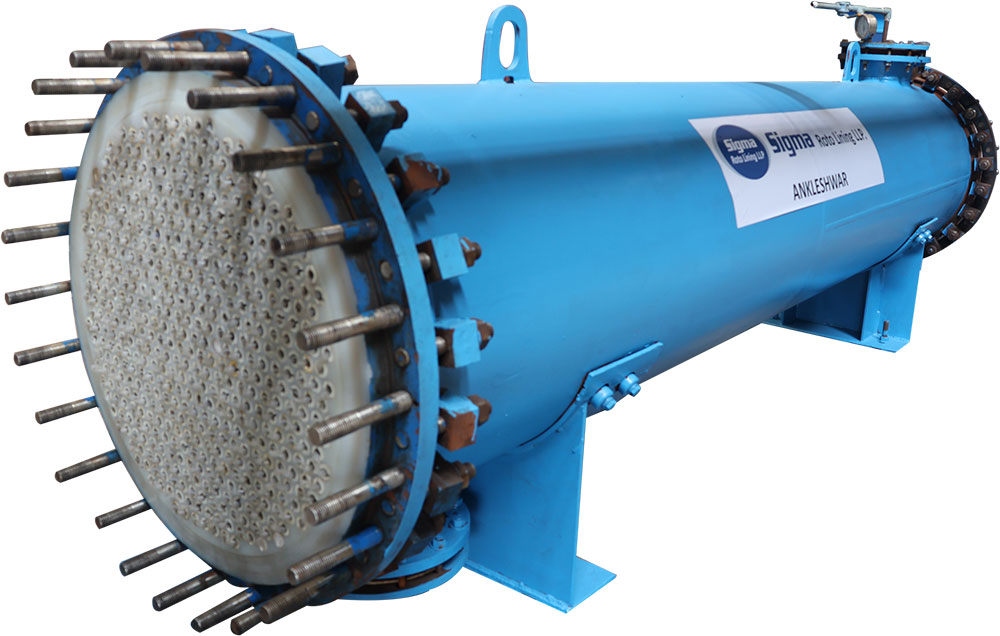
Silicon Carbide Heat Exchangers is a high-performance thermal transfer device made from silicon carbide ceramic material, specifically engineered to handle aggressive fluids, extreme temperatures, and harsh process environments. Unlike metallic or polymer-based exchangers, SiC offers a unique combination of chemical inertness, mechanical strength, and thermal conductivity, making it ideal for applications where other materials rapidly degrade or corrode.
These heat exchangers are available in various formats:
- Shell and Tube Type
- Block-type
- Plate-type
- Annular or Coil-type
Key Features and Advantages of SiC Heat Exchangers
Unmatched Chemical Resistance
- SiC is completely resistant to all inorganic acids, including hydrofluoric acid (HF) which dissolves glass, aqua regia, and other aggressive media.
- It also resists organic solvents, strong oxidizers, and acidic gases — something even titanium or Hastelloy may fail to do under prolonged exposure.
Outstanding Thermal Stability
- With melting points over 2700°C, SiC can safely operate in environments where thermal shocks are common.
- Ideal for processes involving hot acid vapors, chlorination, or high-purity steam.
High Heat Transfer Efficiency
- Despite being a ceramic, its thermal conductivity is equivalent or superior to many metals.
- Allows for compact, high-performance designs where heat needs to be transferred quickly and efficiently.
No Cross-Contamination
- Being non-metallic, SiC doesn’t leach ions or react with process media — critical for:
- Ultrapure water systems
- Semiconductor wet processing
- Pharmaceutical cleanroom setups
Low Maintenance, Long Service Life
- SiC is highly wear-resistant and mechanically strong.
- Requires very minimal cleaning, even in scaling-prone systems.
- Offers decade-long service life with almost no degradation.
No Risk of Galvanic or Crevice Corrosion
- Unlike stainless steel or alloy-based exchangers, SiC is non-reactive to electrochemical effects, avoiding:
- Galvanic corrosion
- Pitting
- Localized surface erosion
Industries & Applications Where SiC Excels
Semiconductor Industry
- Etching, cleaning, and doping processes involve hot acids like HF and HCl, which SiC handles without leaching.
- Heat exchangers are used in chemical delivery, ultrapure fluid heating, and gas scrubbing.
Pharmaceutical & Biotech
- SiC ensures no ion contamination, ideal for drug manufacturing.
- Used in purified water, buffer heating, and cleanroom acid recovery systems.
Metal Treatment & Pickling
- Traditional metal heat exchangers fail in acid pickling (HCl + HF).
- SiC heat exchangers are used in surface finishing, electroplating, and acid bath recycling.
Chemical Processing
- Excellent for handling nitration, sulfonation, halogenation, and chlorination processes.
- Used in the production of acids, dyes, fertilizers, and fluorinated chemicals.
Waste Gas Treatment
- SiC is widely used in scrubbers, HF/HCl absorbers, and acid vapor condensers in environmental systems.
Recent Innovations in SiC Heat Exchanger Technology
3D-Printed SiC Components
- Enables complex internal geometries and higher surface area per unit volume.
- Enhances micro-channel efficiency in compact chemical setups.
Modular SiC Block Exchangers
- Stackable, repairable, and expandable units.
- Suited for pilot plants and batch processes needing scaling flexibility.
Hybrid SiC + Graphite Exchangers
- Combines graphite’s affordability with SiC’s durability in dual-media processes.
- Allows cost optimization in semi-aggressive processes.
Integrated Cleaning Systems
- Some systems use ultrasonic or acid backflushing units integrated with SiC blocks to eliminate downtime.
Design, Handling & Installation Considerations
- Brittle Nature: SiC is hard but brittle, so shock loading or improper mounting can cause cracks.
- Supports & Expansion Joints: Use flexible supports to accommodate thermal expansion and avoid mechanical stress.
- Gasket Materials: Always use chemically resistant materials like PTFE, PVDF, or perfluoroelastomers (FFKM).
- Mounting Position: Ensure vibration-free installation, especially in continuous-duty setups.
- Transport & Storage: Use foam-lined crates, avoid steel-to-ceramic contact.
Product Design Formats
- Shell & Tube SiC Heat Exchangers: Ideal for continuous-flow acid handling.
- Plate-Type SiC Exchangers: Compact design for lab and pharma.
- Block SiC Units: Used in scrubbing and vapor recovery.
- Annular Coil Units: Used in chemical loops where immersion-type heating is required.
Silicon Carbide Heat Exchangers represent a technological leap forward in the field of thermal management — especially in chemically aggressive, high-purity, and high-temperature industrial environments. Unlike traditional materials such as graphite, titanium, or metallic alloys, SiC stands out for its unique combination of properties: chemical inertness, mechanical strength, and exceptional thermal conductivity. These characteristics make it a top-tier solution for operations where equipment failure, contamination, or maintenance downtime is not an option.
Investing in a SiC heat exchanger isn’t just about selecting a heat transfer device — it’s about choosing long-term reliability, safety, and performance. In industries like semiconductors, pharmaceuticals, metal finishing, and chemical processing, the demands for clean operation, resistance to extreme acids (including hydrofluoric acid), and uninterrupted uptime are growing. SiC systems meet and often exceed these demands with ease.