

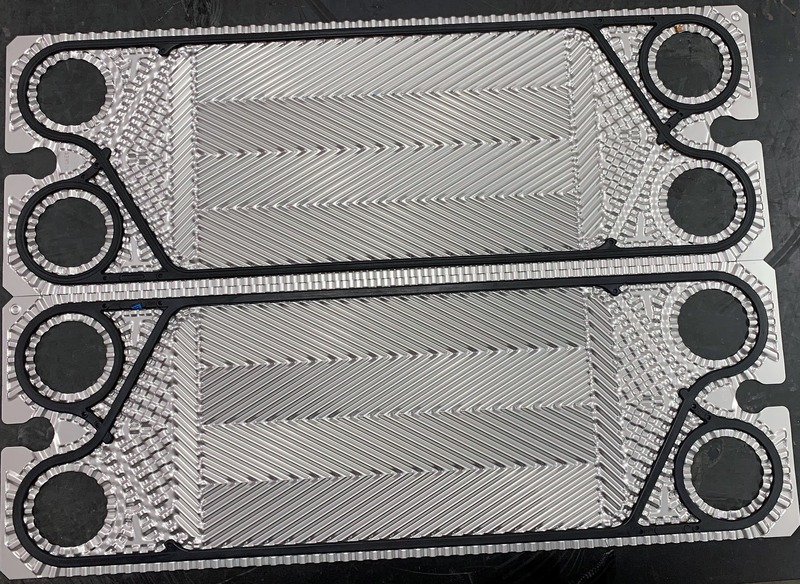
Viton Gasket Plate Exchanger systems represent a high-performance category of heat exchangers tailored for use in industries that face harsh operating conditions, especially involving chemically aggressive fluids and elevated temperatures. These exchangers use Viton® gaskets, a premium fluoroelastomer material known for its excellent resistance to corrosive chemicals, hydrocarbons, acids, and high thermal loads.
Unlike standard gaskets made from NBR (Nitrile Butadiene Rubber) or EPDM (Ethylene Propylene Diene Monomer), Viton gaskets offer a significantly broader chemical compatibility range and maintain sealing integrity even in extreme environments up to 200°C. This makes them ideal for critical operations in chemical plants, pharmaceutical manufacturing, petrochemical refineries, power generation units, and metal processing industries, where system reliability and fluid purity are non-negotiable.
What is Viton?
Viton is a registered trademark for a class of fluoroelastomer (FKM) materials developed by DuPont (now under Chemours). It is known for:
Chemical Composition
- Fluorinated Hydrocarbons: The fluorine content gives Viton its exceptional resistance to chemical attack.
- Different grades (A, B, F, etc.) are available, depending on fluorine content and additional monomers used.
Key Features of Viton Gaskets
- Temperature Range: -20°C to 200°C (and up to 250°C in short bursts)
- Hardness: Typically 70 to 90 Shore A
- Tensile Strength: Excellent tear and compression resistance
- Low gas permeability: Vital for vacuum systems or volatile media
These characteristics make Viton gaskets ideal for sealing plates in heat exchangers, especially in chemically intensive or high-temperature applications.
How Does a Viton Gasket Plate Heat Exchanger Work?
Structure:
- Corrugated Plates – Thin metallic plates (stainless steel, titanium, etc.) create multiple flow paths.
- Viton Gaskets – Precisely molded to seal each plate, channeling fluids into alternate passages.
- Frame Assembly – A fixed and a movable frame clamp the plates and gaskets tightly.
Working Principle:
- Two fluids (hot and cold) flow on alternate sides of each plate, exchanging heat indirectly through the plate surface.
- Gaskets prevent fluid mixing and leaks by sealing the perimeters and flow channels.
- Viton’s chemical stability ensures no degradation or leakage even in challenging environments.
Applications of Viton Gasket Plate Exchangers
- Chemical Processing
- Handles corrosive acids like sulfuric, hydrochloric, and nitric acids
- Withstands chlorinated solvents, ketones, and aldehydes
- Pharmaceutical Manufacturing
- Transfers heat in sterile or aggressive solvent loops
- Resistant to frequent CIP (Clean-in-Place) cycles using acid/alkali cleaners
- Petrochemical Refineries
- Suitable for hydrocarbon processing and heat recovery systems
- Operates in explosive and flammable environments safely
- Power Plants & Cooling Systems
- Can handle glycol-based coolants and chemicals in closed-loop systems
- Resistant to oxidation, aging, and heat cycling
- Metal Surface Treatment
- Used in anodizing, pickling, or electroplating processes involving acid baths
Unique Advantages of Viton Gasket Plate Exchangers
Exceptional Chemical Resistance
- Viton handles over 300 chemicals, including oils, fuels, acids, and chlorinated hydrocarbons.
- Great for multifunctional heat exchangers where chemical variability is expected.
High Thermal Performance
- Consistent sealing performance at 200°C operating temperatures.
- Perfect for industries with thermal spikes or frequent heating/cooling cycles.
Durability & Reliability
- Low compression set means the gasket doesn’t deform or lose elasticity under pressure.
- Lasts much longer in abrasive or chemically reactive environments.
Reduced Maintenance Costs
- Fewer shutdowns due to gasket failure or leaks.
- Longer service life offsets initial cost of Viton material.
Compatibility with Aggressive Cleaning
- Tolerates alkali or acidic cleaning agents without degrading.
- Ensures hygienic heat exchange in pharma or food processing plants.
Limitations to Keep in Mind
Despite its strengths, Viton has some limitations:
- Higher initial cost: Can be 2-4 times the cost of EPDM or NBR gaskets
- Not suitable for polar solvents: Certain grades of Viton don’t resist ketones, esters, or amines well
- Thermal degradation: Above 250°C, it begins to break down, releasing toxic byproducts
- Stiffness at low temperatures: Becomes brittle below -20°C
Maintenance & Best Practices
To maximize the life of Viton gasket plate exchangers:
Do:
- Store spare gaskets in cool, dark, ozone-free environments
- Clean with compatible solvents like isopropanol or mild alkalis
- Use proper torqueing methods when assembling the plate stack
- Perform visual inspection during every maintenance cycle
Avoid:
- Using incompatible chemicals like strong polar solvents (unless you use specific Viton grades)
- Overstretching gaskets during reassembly
- Exposing gaskets to uncontrolled steam or superheated water
Viton Gasket Plate Exchanger is a powerful solution for modern industries where conventional gasket materials fall short. By combining chemical resilience, thermal stability, and mechanical reliability, Viton gaskets make plate heat exchangers suitable for:
- Hazardous process environments
- High-temperature fluid loops
- Chemical recovery systems
Though they carry a premium cost, their low failure rate and extended service life lead to overall cost savings and unmatched reliability. For any industry handling aggressive chemicals or elevated temperatures, investing in a Viton gasket plate heat exchanger is a strategic and durable choice. While the upfront cost of Viton gaskets may be higher than conventional materials, the long-term return on investment is substantial. Fewer shutdowns, reduced leakage, lower replacement frequency, and safer operation translate to enhanced operational efficiency and lower lifecycle costs.