

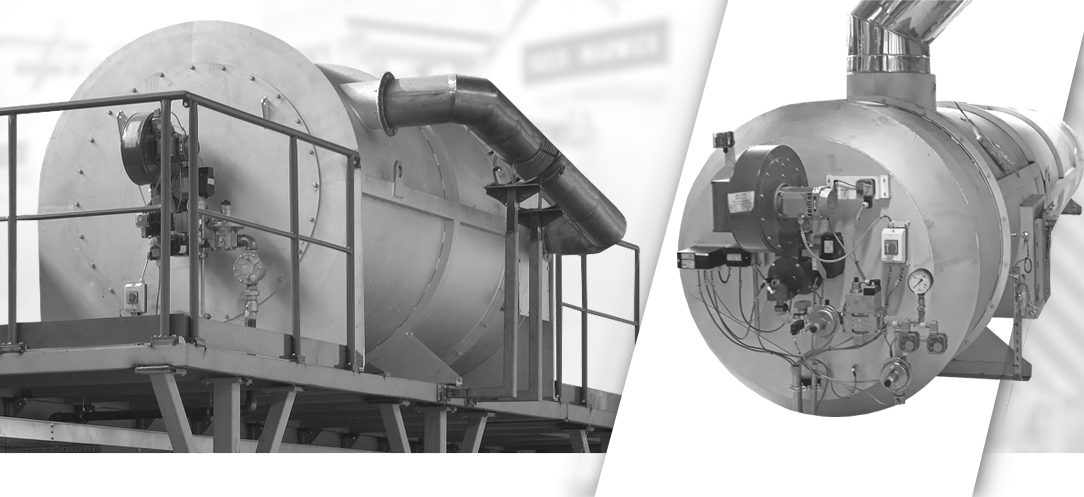
VOC Control Heat Exchanger are essential for maintaining air quality and regulatory compliance in industries that emit volatile organic compounds during production processes. Among the most efficient technologies in this domain, the VOC Control Heat Exchanger plays a dual role: managing emissions and conserving energy.
Volatile Organic Compounds (VOCs) are carbon-containing substances that evaporate easily at room temperature. They are released during:
- Paint application
- Ink printing
- Chemical manufacturing
- Oil refining
- Adhesive and coating processes
- Plastic extrusion
VOCs contribute to smog formation, ozone depletion, respiratory illnesses, and cancer risks. Because of this, many governments enforce strict VOC emission regulations through agencies like the EPA (USA) or CPCB (India). To comply with such regulations while reducing energy consumption, industries are now turning to VOC Control Heat Exchangers — an environmentally responsible and cost-effective solution.
What Is a VOC Control Heat Exchanger?
A VOC Control Heat Exchanger is an engineered device designed to recover and reuse heat energy from VOC-laden exhaust gases before they enter VOC abatement systems like:
- Thermal Oxidizers
- Catalytic Oxidizers
- Condensers
- Adsorption Systems
This heat recovery helps in preheating the incoming fresh air or process air, drastically lowering fuel or electricity consumption and improving overall system efficiency.
How a VOC Control Heat Exchanger Works – Step-by-Step Process
Hot VOC-Laden Exhaust Enters the Exchanger:
Exhaust gases from ovens, dryers, or chemical reactors — often containing high-temperature VOCs — enter the heat exchanger.
Heat Transfer to Incoming Clean Air:
The heat exchanger has two flow paths: one for the hot contaminated air and one for the clean, cooler air. These are kept separate but close enough to allow heat to transfer without mixing gases.
Incoming Clean Air Is Preheated:
As the clean air flows through the exchanger, it absorbs heat from the outgoing exhaust air. This preheated air can now be used in:
- A thermal oxidizer (reducing the fuel needed)
- The production process (improving thermal efficiency)
Exhaust Gas Cools Down Before Emission:
The outgoing VOC-laden air, after heat transfer, is cooled and then:
- Burned in oxidizers (less energy required)
- Condensed (in case of condensing VOCs)
- Released after treatment
This closed-loop system helps in energy conservation and VOC reduction.
Why VOCs Need Heat-Based Control
VOC abatement often requires high temperatures (760–820°C) to break down compounds into CO₂ and H₂O. Without a heat exchanger:
- The oxidizer would require large amounts of fuel.
- There would be increased emissions and operational costs.
By integrating a heat exchanger, thermal efficiency is increased up to 95%, and energy costs are cut by 40–70%.
Types of Heat Exchangers Used in VOC Control
Regenerative Heat Exchangers
- Use ceramic or metallic heat-absorbing media.
- Alternate airflow direction every 60–120 seconds.
- Ideal for high-temperature processes with high VOC concentrations.
- Used in RTOs (Regenerative Thermal Oxidizers).
Recuperative Heat Exchangers
- Use tube-and-shell or plate types for continuous heat transfer.
- Suitable for continuous flow applications.
- Better control of cross-contamination.
Rotary Wheel Heat Exchangers
- Use a rotating disk to transfer heat between streams.
- Compact and efficient; lower pressure drop.
- Common in HVAC systems and VOC recovery from airflows.
Air-to-Air Plate Heat Exchangers
- Use metal plates arranged in layers.
- No moving parts, low maintenance.
- Ideal for low-to-medium temperature VOC-laden air.
Industries Where VOC Heat Exchangers Are Used
- Paint Booths and Automotive Painting
- Coating and Lamination Lines
- Petrochemical Plants
- Pharmaceuticals
- Adhesive Manufacturing
- Electronic Component Manufacturing
- Flexible Packaging Industry
- Plastic Sheet Extrusion
VOC Control Heat Exchanger offers a high-performance, low-maintenance method to recover waste heat while preparing exhaust air for further treatment. With its ability to handle high temperatures, corrosive compounds, and varying airflows, it stands out as a robust solution across multiple sectors. In the face of tightening environmental norms and rising energy demands, integrating VOC control heat exchangers is a forward-thinking choice for any sustainability-driven operation.
VOC Control Heat Exchanger is more than just a component — it’s a critical environmental control tool in modern industries. It represents a smart approach to reducing both VOC emissions and energy consumption, promoting sustainability while maintaining cost-effectiveness. As environmental regulations tighten and energy prices rise, investing in such systems is no longer optional — it’s a strategic necessity.